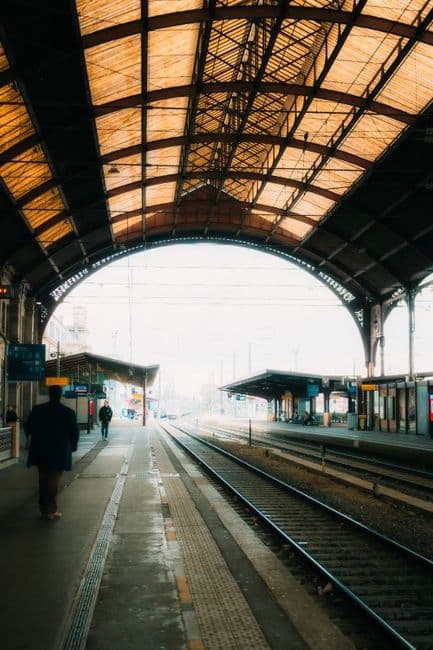
Arriving by Train: The Direct Route
The SNCF network dominates rail access to Alsace. High-speed TGV trains operate from Paris, Lyon, and Geneva. The journey from Paris to Strasbourg is frequent, with multiple departures daily. Travelers should book tickets via SNCF Connect to compare fares — booking further in advance generally means a noticeably lower price than buying at the last minute. Colmar is served by regional TER trains rather than high-speed service. The connection from Strasbourg is a short, straightforward regional hop, making it easy to combine both cities in a single day. The train stops at Colmar-Ville station, within walking distance of the city center and well connected to local buses. For those coming from Germany, the ICE train from Basel or Munich offers another direct option and is popular with Swiss and German travelers. A practical advantage of rail travel is avoiding parking altogether — parking in the historic centers of Colmar and Strasbourg is limited and can add up over a multi-day stay. However, luggage space on trains is limited; if you're bringing bulky hiking gear or wine crates, a car may be more convenient.Flights to Strasbourg and Basel
Strasbourg-Entzheim Airport (SXB) is the primary regional airport, located about 10 km from the city center. Direct flights are limited to major European hubs like London, Amsterdam, and Brussels; Ryanair operates seasonal routes to several cities in the UK and Spain, with fares that reward early booking. See Strasbourg Airport's official site for current routes. Basel-Mulhouse-Freiburg Airport (EuroAirport) is another option. It serves three countries and sits closer to the southern part of Alsace, roughly 55–60 km from Colmar and around 130 km from Strasbourg. This airport has more international connections, including flights from New York and Toronto. Getting from EuroAirport to Colmar takes meaningfully longer than the equivalent trip from Strasbourg-Entzheim, so factor in the ground transfer when comparing flights. Comparing the two airports: Strasbourg-Entzheim is generally more convenient for northern Alsace, while Basel/EuroAirport can work well for the Wine Route and Colmar despite the longer transfer, especially if it offers a more direct or cheaper flight.Car Rental: Essential for the Wine Route
While trains are efficient for cities, a car is close to essential for the Wine Route. The vineyards are scattered across hillsides, often far from public transport stops. A rental car allows you to visit wineries at your own pace. Major international agencies like Hertz, Sixt, and Enterprise have offices in Strasbourg and Colmar. Rental prices vary noticeably by season, rising in peak months (roughly September–October) compared with the off-season. Fuel costs should be factored into your budget as well. If you rent in Strasbourg, the office is usually near the train station or airport; pick-up can be busy, so arriving a little early is advisable. The rental agreement will include a CDW (Collision Damage Waiver) — this is standard, but check the excess amount, since some agencies charge a substantial excess if you don't buy additional insurance. Driving in Alsace requires caution. The roads are narrow and winding, speed limits drop within villages, and radar cameras are common — check posted signs, especially entering small towns, since fines for speeding are real and not always small.Driving Tips and Road Conditions
Alsatian roads are well-maintained but can be more challenging in winter, when snow is common in the higher parts of the Wine Route and chains may be required in the colder months — check the forecast before driving. The A35 highway connects Strasbourg to Mulhouse and is a major artery for traffic. Parking in Colmar is difficult — the historic center is pedestrian-only, so you'll need to park in designated lots outside the zone and either walk in or take the bus. The bus system is reliable and inexpensive. For the Wine Route, a scenic signed road threads through key villages like Riquewihr and Kaysersberg. These villages are popular tourist stops, and traffic can be heavy on weekends — arriving early in the morning is a smart strategy to beat the crowds and find parking. Weighing the numbers, a rental car often works out more economical than repeated taxi rides once you're visiting more than one or two stops, on top of giving you far more flexibility.Practical Examples and Itineraries
Consider a three-day itinerary. Day one: arrive in Strasbourg by TGV and explore the city center. Day two: rent a car and drive to Riquewihr and Kaysersberg, visiting a couple of wineries. Day three: drive to Colmar, return the car, and take the train back to Paris. This hybrid approach keeps costs reasonable while covering both cities and the Wine Route. Another option is flying into Basel, renting a car immediately, and driving to Colmar to spend a couple of days in the south before returning to Basel for the flight home — this skips the train ticket back to Strasbourg, trading some cost for flexibility. For budget travelers, FlixBus operates routes from Paris to Strasbourg. The trip takes noticeably longer than the train but typically costs less — comfort is lower, and the bus stops at a terminal outside the city center, so you'll need a taxi or local bus to reach your hotel. A common misconception is that public transport covers the Wine Route. It does not — buses run on limited schedules, and missing one can leave you stranded for hours. A car provides the freedom to stop at any vineyard, which is the primary reason visitors rent one.- Book train tickets on SNCF Connect well in advance — earlier booking generally means a noticeably better fare.
- Renting a compact car in Strasbourg is most affordable in the off-season.
- Park in a designated Colmar Centre garage rather than risking a fine in the pedestrian zone.
- Check the A35 highway for traffic delays before driving to the Wine Route on weekends.